

Healthcare today is as much about financial survival as it is about patient care. Providers must balance shrinking margins, shifting compliance requirements, and fragmented technologies all while delivering quality outcomes.
These pressures have prompted organizations to reassess how they manage their revenue cycle, seeking partners who offer more than claims processing.
There is a growing assumption across healthcare that the future of revenue cycle performance will be driven by more advanced AI. In reality, the organizations that will outperform over the next five years won’t be the ones with the most advanced tools.
They will be the ones who understand where revenue is actually being created and where it is quietly being lost.
Because today, most revenue loss isn’t happening where leadership is looking. It is not primarily an A/R problem. It is a design problem.
Most organizations evaluate performance through what they can see such as aging, collections, and denial rates. But those are lagging indicators. They reflect decisions that were made weeks or months earlier. The real breakdown is happening upstream.
We regularly see authorizations approved under the wrong servicing location, tied to incorrect HCPCS codes, or aligned to inaccurate quantities. On paper, the authorization exists. In practice, it guarantees denial.
“Our clients don’t need another vendor. They need a partner who thinks with them, not just for them.”
These are not isolated issues. They are systemic gaps that create downstream friction and, ultimately, lost revenue. By the time these issues surface in A/R, they are no longer operational problems. They are financial losses.
One of the biggest risks for leadership teams today is misplaced confidence. A/R can look stable. Teams can appear productive. Reports can show consistent performance. But underneath that stability, there are often signs of inefficiency and lost revenue that are easy to overlook.
Adjustments and write-offs may be masking preventable issues. Short pays may not be fully pursued. Denials may be resolved without ever being analyzed for root cause, allowing the same patterns to continue. The most expensive revenue problems are often the ones that never make it into denial reports — they are adjusted, written off, or simply never pursued because the effort to recover them outweighs the perceived value.
Over time, that becomes embedded in the operation and accepted as normal. The organizations that will move ahead are the ones willing to challenge the assumption that “manageable” equals optimized.
A Consultative Approach That Drives Real Results
For ACU-Serve, the answer has never been to settle for transactional billing. The company positions itself as a true extension of its clients’ teams — committed to solving immediate revenue challenges while laying the foundation for long-term growth.
At the heart of ACU-Serve’s mission is a consultative approach that identifies root-cause issues, improves processes, and strengthens compliance. While some RCM partners narrowly focus on individual claims, ACU-Serve ensures the entire revenue cycle — from intake to payer engagement — is aligned for accuracy and efficiency.
Rather than forcing disruptive system overhauls, ACU-Serve integrates seamlessly into existing platforms, accelerating time to value.
The Shift Leaders Need to Make
Optimizing for the future requires a shift in how revenue cycle performance is defined and managed.
First, it requires moving accountability upstream. Revenue cycle success is not created in collections — it is protected or lost at intake.
That means intake can no longer function as a transactional step.
With clean claims and transparent analytics, clients often see success:
- within 30–60 days
- 93–95% recovery rates
- AR +90 days <15%
The Role of Technology and Its Limits
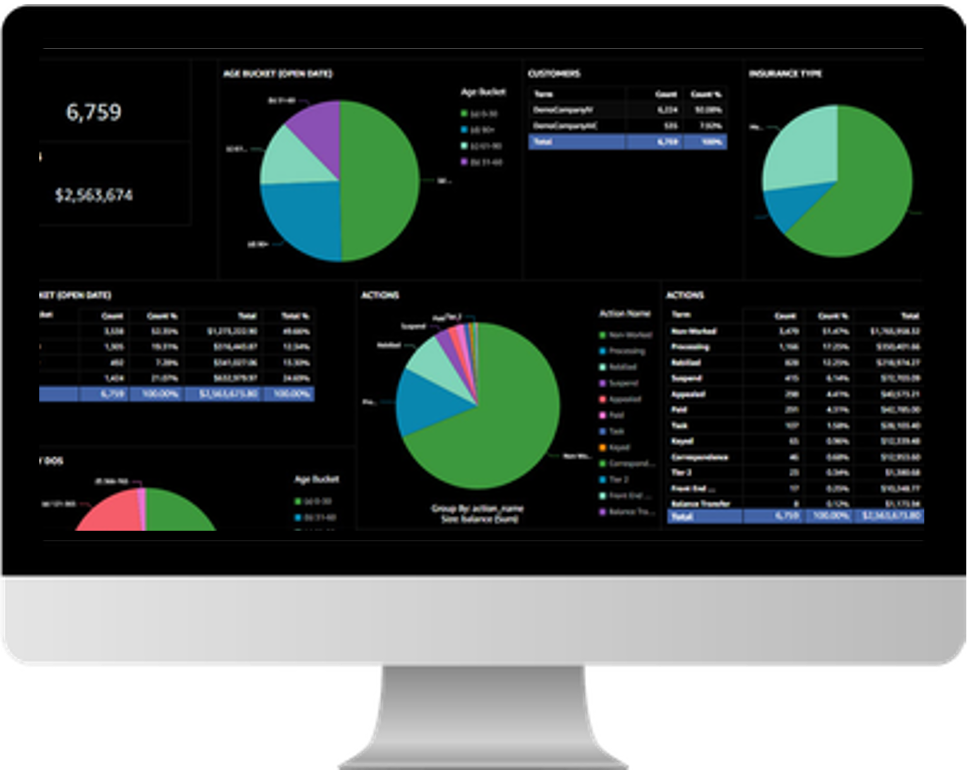
Technology will continue to play an important role in the future of revenue cycle management. ACU-Insight, ACU-Serve’s proprietary platform, equips clients with denial analytics, payer trend monitoring, and real-time dashboards optimized for platforms.
The opportunity is not in adding more tools. It is in ensuring that the foundation those tools rely on is strong enough to support them.
What Optimization Actually Looks Like
For leadership teams, optimizing for the future is not about doing more. It is about doing the right things with greater precision. It means ensuring documentation is not just collected, but validated before services are delivered. It means building payer-specific workflows that reduce variability and improve consistency. It means creating visibility not just into outcomes, but into the decisions that drive those outcomes.
Clients often remark that working with ACU-Serve feels less like outsourcing and more like expanding their in-house team. That sense of shared responsibility and alignment, from intake through collections, has become a defining element of the ACU-Serve culture.